
Homepage hero preview for a pseudonymous education information concept

Education concept

Education Information Experience

This concept presents an educational institution as a clear, dependable digital destination for prospective learners, families, current students, educators, and community stakeholders. It brings learning pathways, admissions guidance, student life, and institutional updates into one understandable experience.

Delivery and positioning

We would begin with a Web Assessment of the existing content, navigation, accessibility, mobile experience, performance, and public trust signals. The findings would guide the information architecture, content model, responsive templates, enquiry pathways, and implementation priorities.

The completed experience would be positioned as the institution's digital front door: informative enough to support confident decisions while keeping formal admissions and student records within authorized systems.

Trust by Design™ objectives

  • Transparency by Design: make programs, requirements, timelines, and next steps easy to verify.
  • Privacy by Design: minimize enquiry data and direct sensitive interactions to approved channels.
  • Standards by Design: apply semantic structure, responsive behavior, and WCAG-oriented accessibility.

Design focus

The design emphasizes clear hierarchy, accessible navigation, and visible enquiry boundaries because education audiences arrive with different levels of familiarity and urgency. Prominent pathways reduce searching, while a calm editorial system helps institutional information feel credible and manageable.

Web Assessment positioning

This concept demonstrates the direction an assessment may support when an education website needs clearer wayfinding, stronger mobile usability, accessible content patterns, and better separation between public information and protected student services. Final recommendations depend on verified findings.

Homepage hero preview for a pseudonymous manufacturing portfolio concept

Manufacturing concept

Manufacturing Product Portfolio

This concept turns a manufacturer's capabilities and product portfolio into a practical evaluation tool for engineers, technical buyers, procurement teams, distributors, and prospective partners. It connects material categories, applications, capabilities, and enquiry routes without forcing visitors to interpret an internal catalog structure.

Delivery and positioning

Delivery would start with a Web Assessment of product taxonomy, technical content, search behavior, mobile usability, performance, and credibility signals. We would then structure category and application journeys, define reusable product-content fields, prototype priority pages, and prepare a governed publishing workflow.

The portfolio would be positioned as digital sales enablement: a credible resource that helps qualified buyers understand fit and reach the right team, rather than an e-commerce experience unless transaction requirements are approved.

Trust by Design™ objectives

  • Transparency by Design: present applications, limitations, and technical information without exaggerated claims.
  • Governance by Design: define ownership and review controls for product data and downloadable documents.
  • Standards by Design: use consistent product structures that support accessibility, search, and maintainability.

Design focus

The design prioritizes product discovery, structured catalog navigation, and decision-supporting content because industrial visitors usually arrive with an application, specification, or sourcing question. The visual system makes categories comparable while preserving space for verified technical detail.

Web Assessment positioning

This direction is appropriate when an assessment identifies fragmented product information, weak application pathways, inconsistent specifications, or difficulty reaching a technical contact. The confirmed findings would determine catalog depth, content remediation, and integration scope.

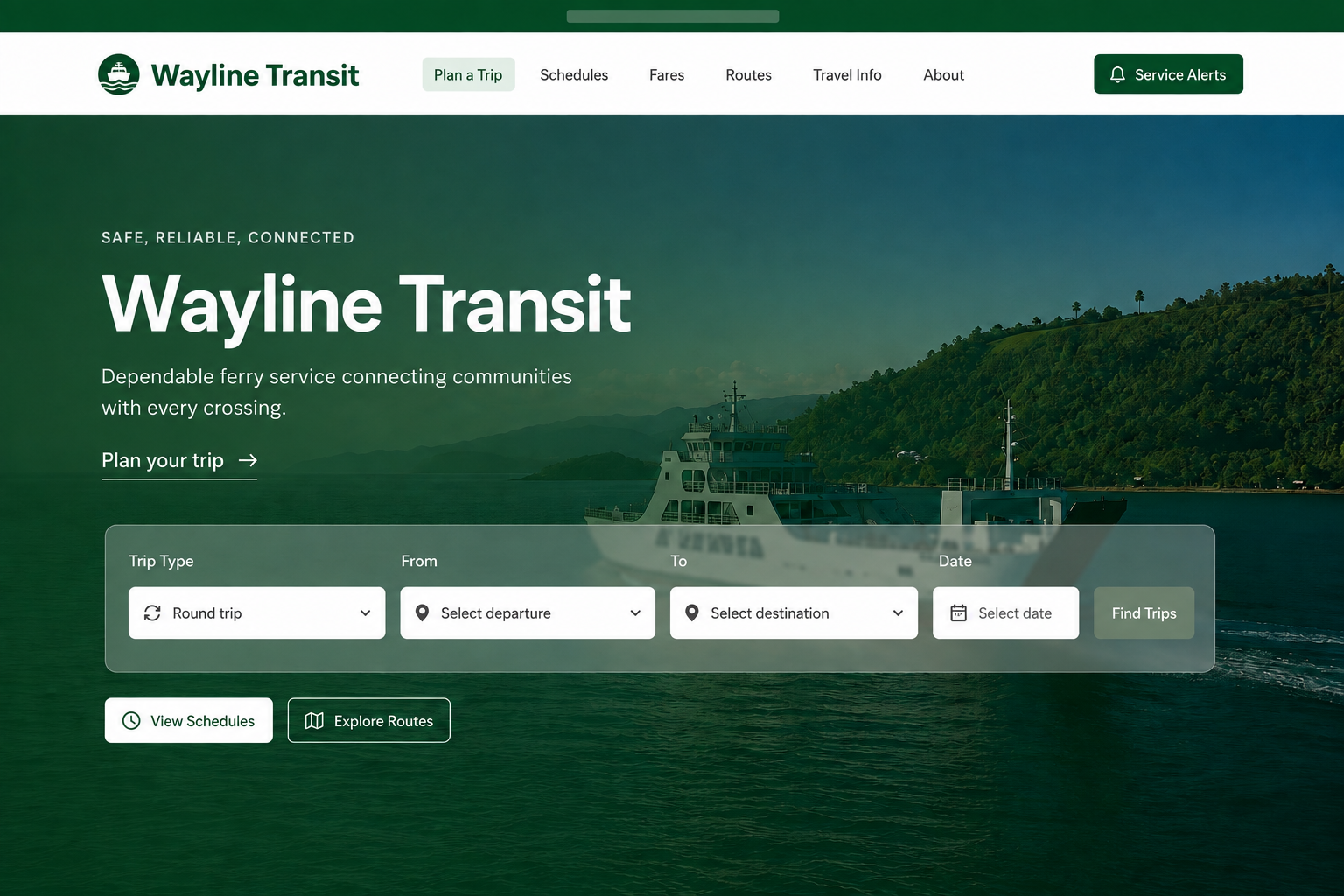
Homepage hero preview for a pseudonymous passenger travel information concept

Transport concept

Passenger Travel Information Hub

This transport concept is a public journey-information hub for passengers who need to find routes, review schedules, understand service conditions, and prepare before travelling. It is designed to reduce uncertainty at the point when accurate, timely guidance matters most.

Delivery and positioning

We would begin by assessing the current route and schedule content, common passenger tasks, mobile and low-bandwidth performance, accessibility, service update workflows, and the boundary between public information and operational systems. Delivery would then move through journey mapping, content normalization, responsive prototyping, accessible implementation, and launch validation.

The experience would be positioned as the dependable information layer of the transport service. Booking, payment, tracking, or account functions would only be introduced when their integrations, controls, and support responsibilities are verified.

Trust by Design™ objectives

  • Transparency by Design: make routes, schedules, service conditions, and limitations clear.
  • Resilience by Design: keep essential guidance usable on mobile devices and constrained connections.
  • Privacy and Secure by Design: separate public information from future booking, payment, and account services.

Design focus

The design focuses on journey planning, immediate service guidance, and obvious next steps because transport users are often time-sensitive and mobile-first. Strong route cues, restrained content blocks, and clear status language reduce cognitive load while the interface preserves a deliberate separation from future booking services.

Web Assessment positioning

This concept shows how we would respond when a Web Assessment reveals difficult route discovery, unclear schedules, weak mobile usability, or missing service guidance. For passenger, shipping, or logistics organizations, verified findings would determine whether the priority is information architecture, live data, tracking, quotation, or transactional integration.

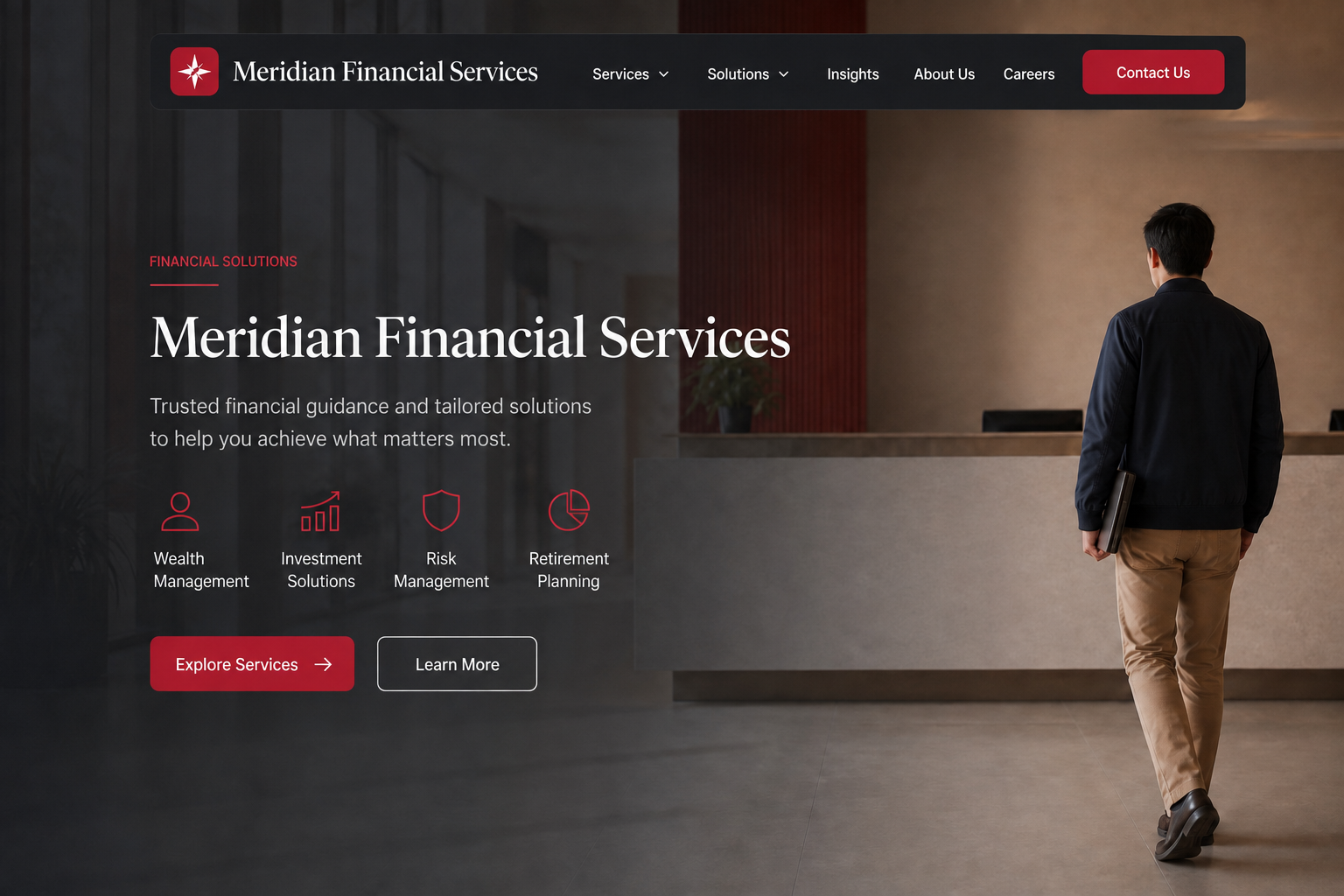
Homepage hero preview for a pseudonymous financial services information concept

Financial services concept

Financial Services Information Experience

This concept is a public guidance experience for people comparing financing options and preparing to speak with an authorized representative. It explains available paths, requirements, responsibilities, and next steps without presenting the public website as an approval or transaction channel.

Delivery and positioning

Delivery would begin with a Web Assessment covering content accuracy, disclosure placement, customer journeys, accessibility, privacy, security cues, verified contact channels, and the separation of public and protected functions. Findings would guide content remediation, comparison structures, enquiry controls, and implementation priorities.

The portfolio position is a trustworthy financial-information layer that improves understanding and directs users to authorized channels. It does not imply eligibility, approval, rates, returns, or regulatory status.

Trust by Design™ objectives

  • Transparency by Design: explain requirements, responsibilities, limitations, and next steps in plain language.
  • Privacy by Design: minimize public data collection and identify authorized communication channels.
  • Secure by Design: keep sensitive applications and account activities outside the public information layer.

Design focus

The design uses plain-language guidance, visible disclosures, and verified channel direction because financial decisions require confidence without pressure. The hierarchy gives equal importance to benefits, conditions, and safe next steps so the experience informs rather than overpromises.

Web Assessment positioning

This direction would be recommended when verified assessment findings show unclear product explanations, buried disclosures, inconsistent calls to action, accessibility barriers, or uncertainty about legitimate contact routes. The final scope would follow compliance and stakeholder validation.

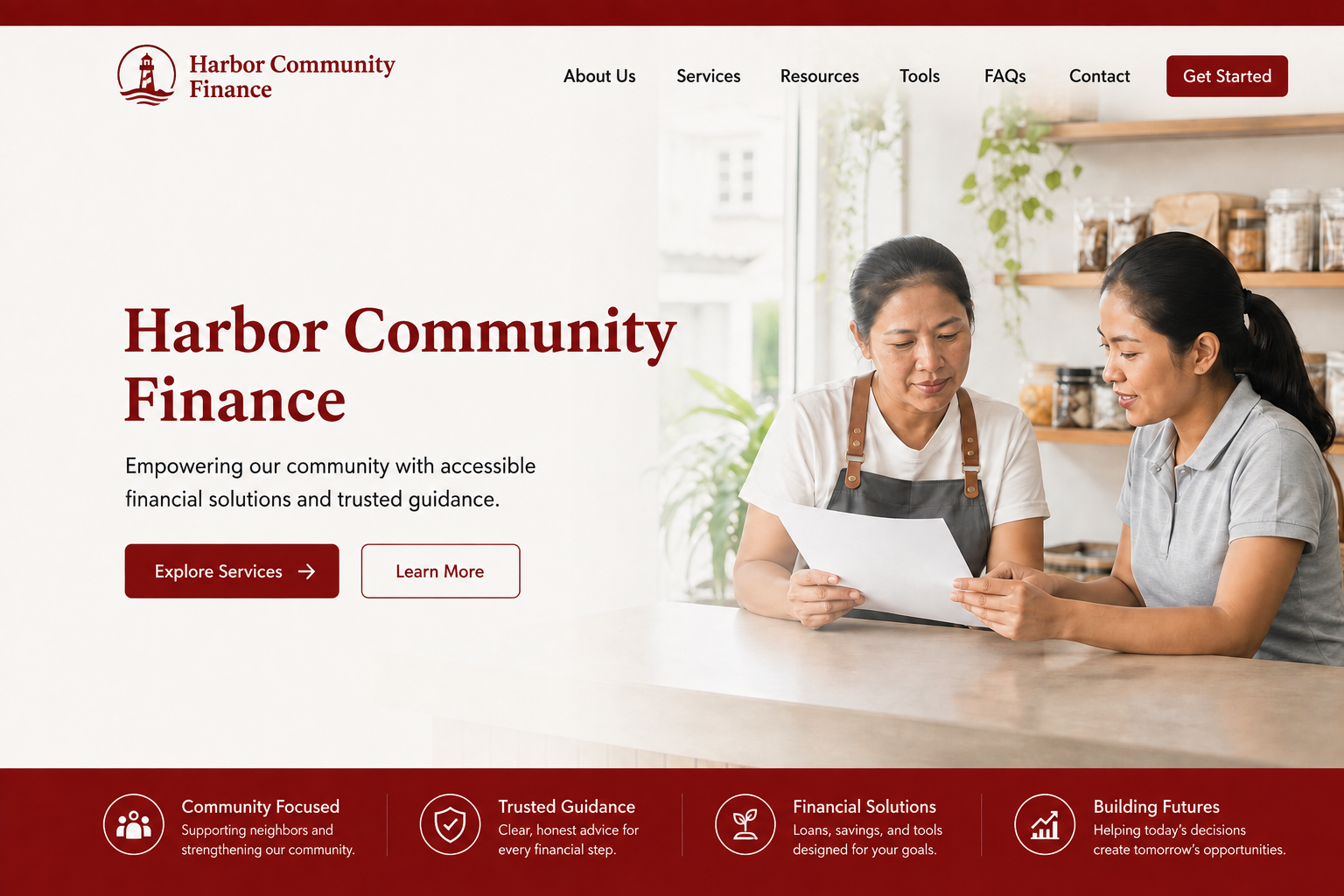
Homepage hero preview for a pseudonymous community finance guidance concept

Community finance concept

Community Finance Guidance Experience

This community-finance concept is designed for people who need straightforward guidance before discussing a financial need with an authorized representative. It organizes options, requirements, educational content, and support pathways around everyday questions rather than institutional terminology.

Delivery and positioning

We would assess content clarity, community access needs, mobile performance, accessibility, privacy notices, enquiry handling, and channel legitimacy. Delivery would combine content simplification, needs-based navigation, responsive templates, safe-contact patterns, and a maintainable publishing model.

The experience would be positioned as an accessible community information and guidance service. Its role is to help people understand available pathways and reach the right support, not to collect sensitive applications or promise outcomes.

Trust by Design™ objectives

  • Transparency by Design: describe options, responsibilities, and next steps without ambiguous claims.
  • Privacy by Design: limit public forms and explain how information will be handled.
  • Standards by Design: support accessible reading, mobile use, and consistent content governance.

Design focus

The design focuses on transparent information, safe next steps, and privacy-conscious communication because users may be unfamiliar with financial terminology or cautious about sharing information. Friendly visual pacing and needs-based labels create approachability without weakening trust boundaries.

Web Assessment positioning

This concept represents the response to assessment findings such as confusing service categories, dense language, limited mobile access, or unclear enquiry handling. Verified findings would determine the content priorities, assistance model, privacy controls, and channel integrations.

Homepage hero preview for a pseudonymous technology services concept

Technology concept

Technology Services Website

This concept gives organizations a clear way to understand a technology provider's capabilities, delivery areas, and consultation pathways. It is structured for decision-makers who need to connect a business or operational problem with the right technical conversation.

Delivery and positioning

We would start with a Web Assessment of service architecture, audience needs, content evidence, search visibility, performance, accessibility, security cues, and enquiry flow. The findings would shape service narratives, sector pathways, reusable proof patterns, consultation CTAs, and the technical implementation roadmap.

The result would be positioned as a consultative B2B platform: specific enough to qualify opportunities and demonstrate engineering judgment, while leaving solution commitments to a properly scoped discovery process.

Trust by Design™ objectives

  • Secure by Design: Apply protective controls, safe defaults, and clear security boundaries appropriate to the concept.
  • Governance by Design: Define clear ownership, approval, accountability, and content-management responsibilities.
  • Transparency by Design: Present information, limitations, requirements, and next steps clearly and verifiably.

Design focus

The design focuses on service architecture, credible positioning, and structured consultation discovery because technology websites often become broad lists of capabilities. Clear groupings and contextual paths help a buyer understand relevance before being asked to contact the team.

Web Assessment positioning

This direction is suitable when an assessment confirms overlapping service descriptions, weak differentiation, unsupported claims, fragmented calls to action, or technical performance and accessibility issues. The evidence would determine which services, proof points, and journeys receive priority.

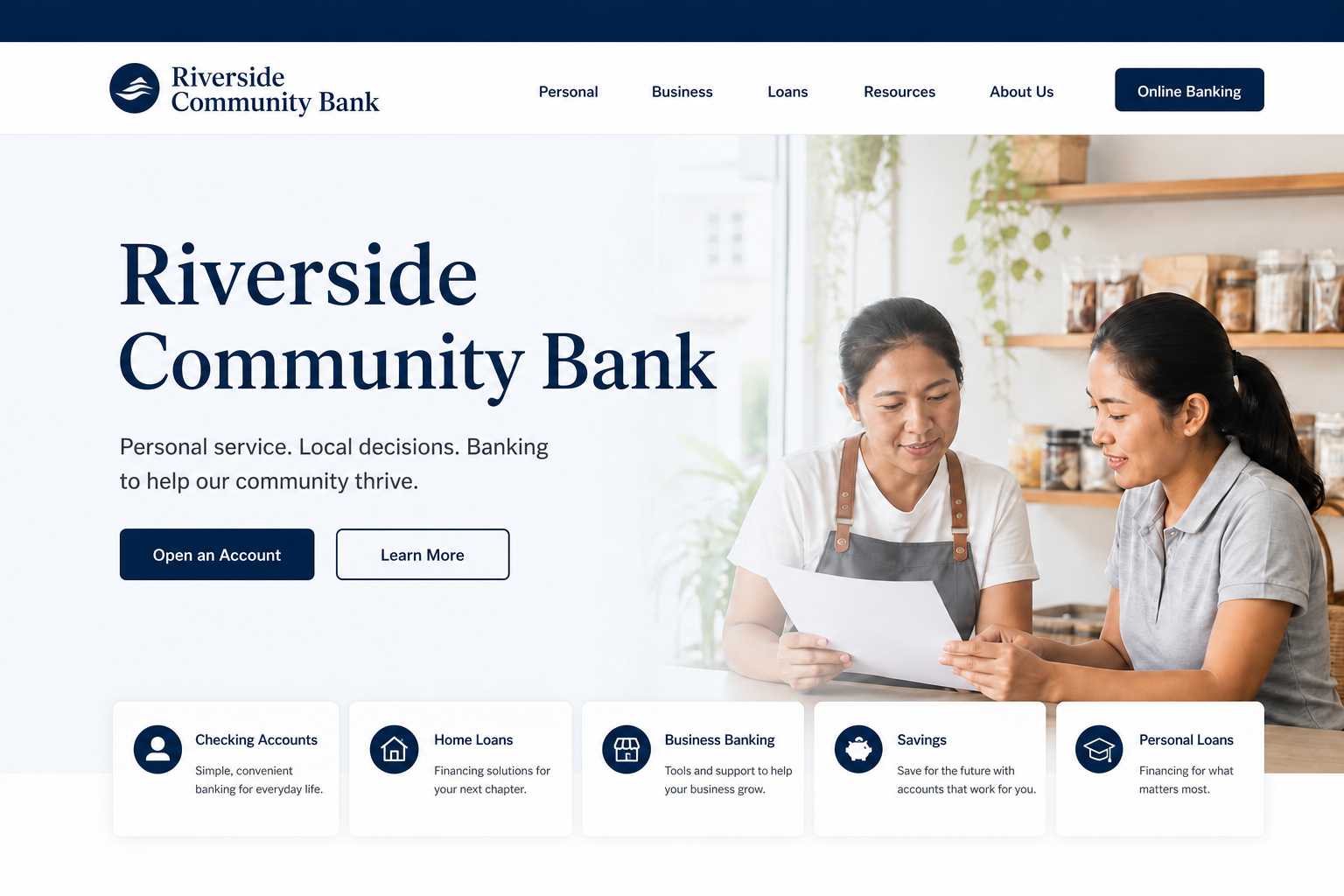
Homepage hero preview for a pseudonymous community banking information concept

Banking concept

Community Banking Information Experience

This banking concept provides customers and small businesses with a clear public-information front door for understanding service categories, branch support, requirements, and fraud-awareness guidance. It is deliberately separate from authenticated banking and transaction processing.

Delivery and positioning

Delivery would begin with a Web Assessment of customer tasks, public content, disclosures, accessibility, mobile performance, security messaging, contact verification, and links to protected services. Findings would inform the service finder, branch guidance, fraud content, governance workflow, and launch controls.

The experience would be positioned as a trustworthy public service layer that prepares customers for the correct next step. Account access, applications, identity verification, and payments remain within approved secure systems.

Trust by Design™ objectives

  • Secure by Design: make the boundary between public guidance and protected banking unmistakable.
  • Privacy by Design: minimize public collection and route sensitive needs to authorized channels.
  • Resilience and Transparency by Design: keep essential service and fraud guidance clear, current, and accessible.

Design focus

The design prioritizes information clarity, security awareness, and non-processing public pathways because trust depends on users knowing what the site can safely do. Strong service categories and fraud guidance support confident navigation without making the public interface resemble online banking.

Web Assessment positioning

This concept addresses assessment findings such as unclear service ownership, inconsistent disclosures, weak fraud-awareness visibility, confusing external links, or mobile accessibility barriers. Confirmed findings and regulatory review would define the final content and integration boundaries.

Homepage hero preview for a pseudonymous secondary education concept

Education concept

Secondary Education Digital Presence

This concept presents a secondary school as a welcoming, well-organized digital community for prospective students, families, current learners, educators, and alumni. It connects academic pathways, admissions guidance, campus life, and community updates through audience-centered navigation.

Delivery and positioning

We would assess content ownership, admissions journeys, family and student needs, accessibility, mobile usability, performance, privacy, and links to protected school services. Delivery would progress from content and journey planning to responsive prototypes, accessible templates, publishing governance, and launch-readiness validation.

The portfolio would be positioned as a school information and community experience that builds understanding and belonging. It supports discovery and enquiries while keeping student records and authenticated functions in approved systems.

Trust by Design™ objectives

  • Transparency by Design: make programs, policies, admissions steps, and official updates easy to locate.
  • Privacy by Design: protect learner information and limit public enquiry collection.
  • Governance and Standards by Design: establish accessible templates and accountable content ownership.

Design focus

The design focuses on accessible information, parent-and-student orientation, and maintainable content patterns because school audiences need both practical answers and a sense of community. Editorial imagery supports belonging, while structured pathways keep admissions and academic information easy to act on.

Web Assessment positioning

This direction would follow verified findings such as fragmented admissions content, outdated notices, inconsistent mobile behavior, accessibility gaps, or unclear ownership. The assessment would determine the content migration, governance, integration, and phased delivery priorities.

Planning a digital experience for your organization?

Start a practical conversation about your goals, users, risks, and delivery priorities.